
About us
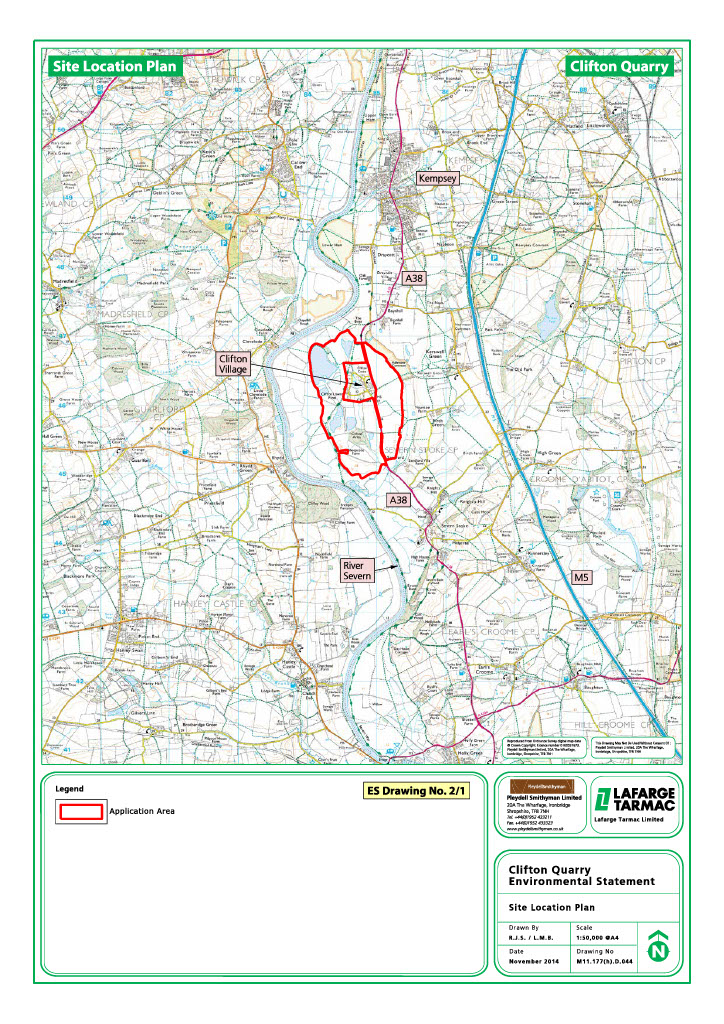
Clifton Quarry is a sand and gravel quarry in Worcestershire, located between the villages of Kempsey and Severn Stoke.
Planning permission was first granted at Clifton Quarry in 1990. This permission, together with other permissions subsequently granted, were consolidated in the current permission issued in 2016.
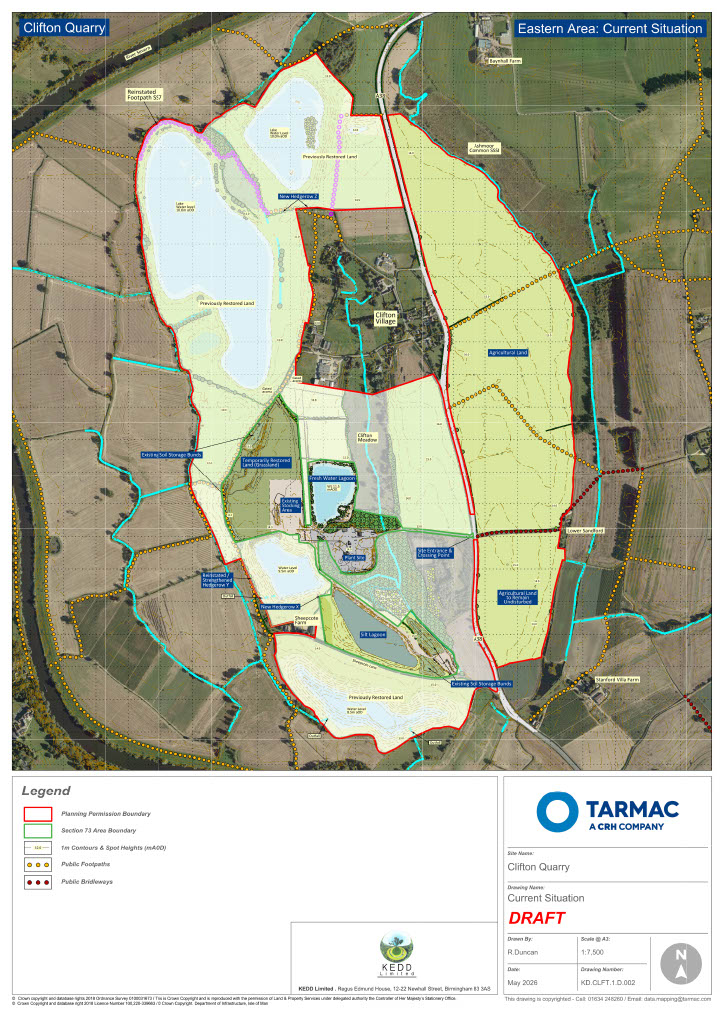
The 2016 permission authorises the phased extraction of approximately 2.2 million tonnes sand and gravel from within an area extending to approximately 176 ha of land, situated both west and east of the A38 in the vicinity of Clifton Village. The total extent of the 2016 planning boundary and the working phases (A – G) is shown on the plan extract below.
To date only the land west of the A38 has been fully worked of sand and gravel and extraction of the western area was completed in 2026. The operation was carried out using conventional de-watering methods, with the sand and gravel extracted using mobile 360 excavator. The mineral was then transported back to the processing plant using field conveyors and dump trucks, where it was stored, processed and sold.
The land to the east of the A38, which has yet to be worked, is the subject matter of this consultation which, in brief, seeks material changes to the currently approved working scheme.
With the western area completed, the existing processing plant, offices and weighbridge, on the west side of the A38, have been temporarily mothballed in anticipation of the eastern extraction area coming on stream.
Other than the plant site area, which has been retained in readiness to process mineral to be worked on the east side of the A38, all the land to the west has been restored and is in aftercare.
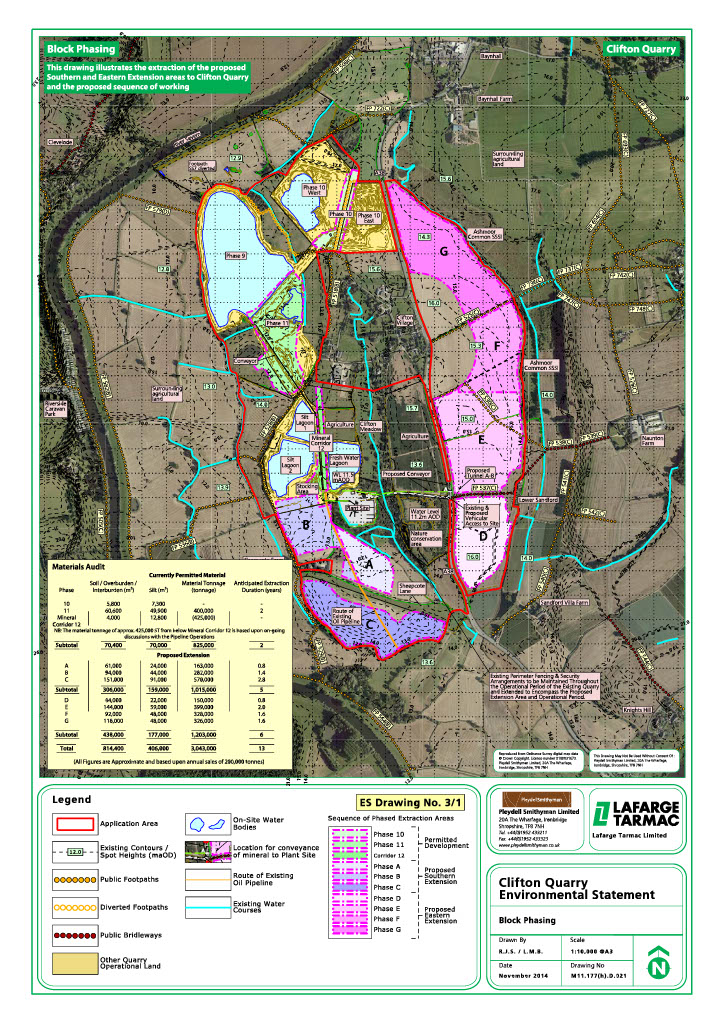
Plan showing block phasing approved in 2016
The Team
About Tarmac
Tarmac is the UK’s leading supplier of construction materials, with over 150 years’ worth of experience providing materials. Tarmac is part of CRH group, the leading producers of aggregates, asphalt, cement and concrete blocks in the UK. We are a major UK employer, with around 7,000 people working across more than 350 sites.
We provide vital building materials, such as stone, sand, gravel, concrete, asphalt and mortar, which enable the construction and maintenance of homes, roads and key national infrastructure that are an essential part of our everyday lives.
As a large landholder, Tarmac is committed to managing the balance between industry, the natural environment and the communities we serve.
About the mineral
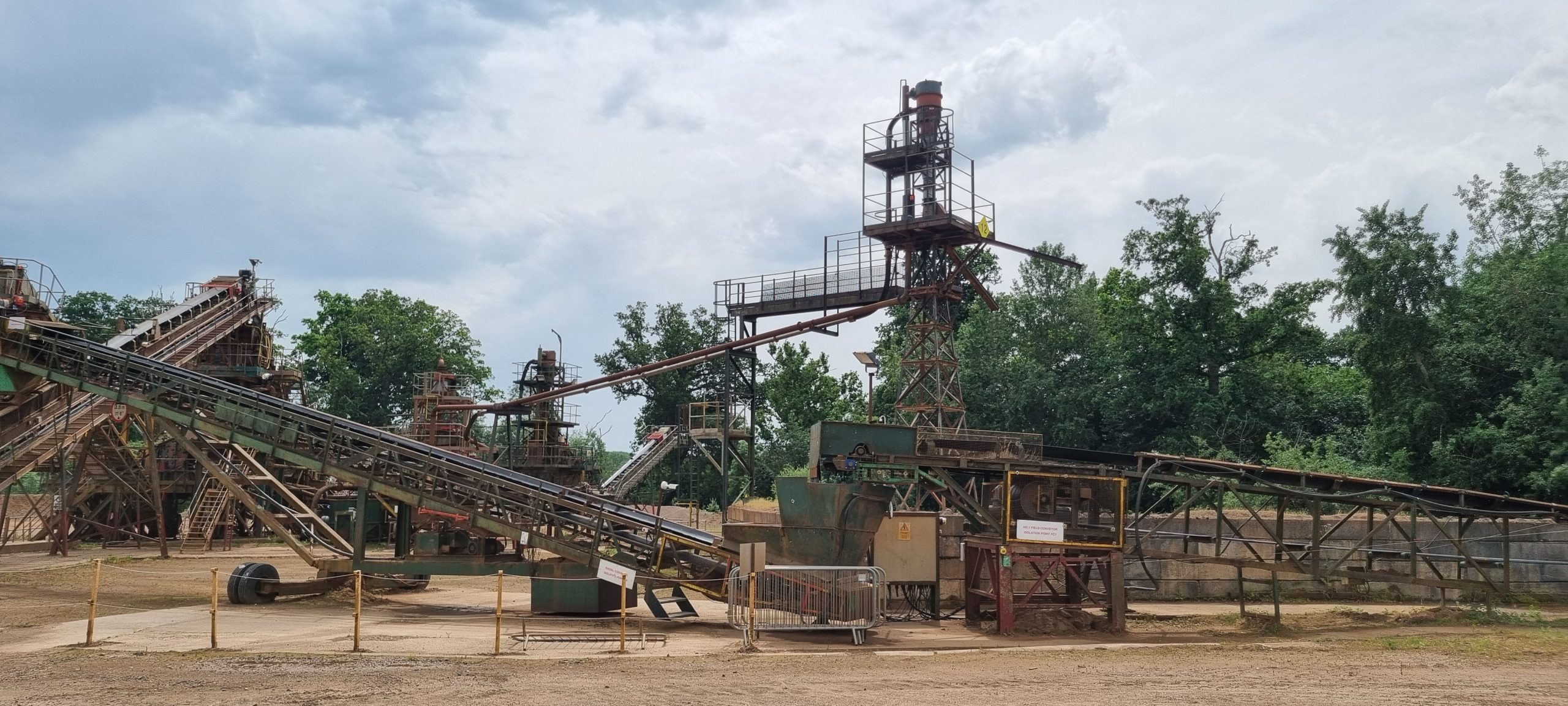
Sand and gravel quarries can only be extracted where these minerals naturally occur. The quarry itself is where these essential materials are safely extracted from the ground and subject to screening and processing. Sand and gravel are the core components of many construction materials and used in a wide range of products and applications, such as ready mixed concrete, tarmac (asphalt) and mortar.
Once the minerals are removed, the land is restored to create habitats, farmland or areas for recreation and conservation.
Clifton Quarry has been worked in phases using conventional dry extraction techniques. This means sand and gravel are removed using excavators and transferred by conveyor to an on-site processing plant. This involves:
- Water Management: The management of water before extraction begins. Groundwater levels are managed to allow the material to be dug out drier - which is safer and more efficient.
- Digging and transporting: Excavators dig the sand and gravel, which is then moved using dump trucks and a conveyor system that carries it to the on-site processing plant.
- Sorting and cleaning: Once at the processing plant, materials are screened to remove large debris, washed to clear away clay and silt, and sorted into different sizes for use in construction.
- Loading of Trucks: Trucks are loaded with the sold materials and leave site to be delivered to where they’re needed.
